The Ray-Ban Meta Gen 2 arrive with the promise of significantly improving two of the most criticized aspects in the previous generation: image quality and battery life. This new version, the product of the collaboration between Meta and the iconic eyewear brand, not only refines the design but also bets on a more polished and functional experience for those seeking to integrate technology and style in a single device.
In this review, we will delve into the concrete improvements that Gen 2 introduces over its predecessor. From a noticeably sharper camera, ideal for capturing moments with greater fidelity, to an optimized battery that extends real-world usage hours, each aspect has been rethought to offer stronger, more reliable performance.
Furthermore, we will explore how these advances affect the user’s daily experience, both in casual scenarios and in more demanding situations. Is this evolution significant enough to leave the first generation behind? Does it really meet the expectations set by Meta and Ray-Ban? Below we present a detailed analysis that seeks to answer these questions with concrete data, real tests and an objective view of what this second generation of smart glasses represents.
Design that goes unnoticed: the key to the aesthetic success in the Ray-Ban Meta Gen 2
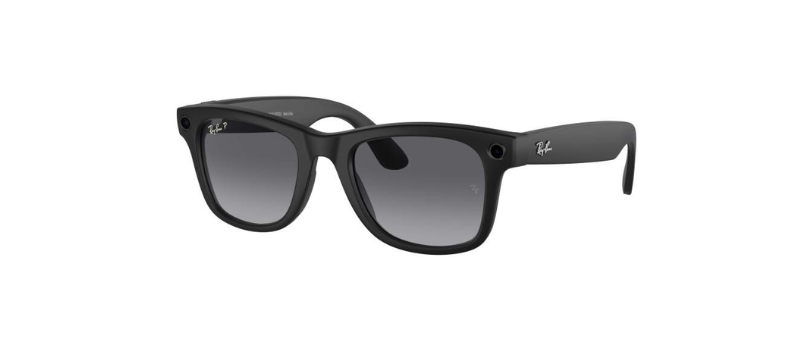
One of the biggest successes of the Ray-Ban Meta Gen 2 glasses is something that, curiously, doesn’t jump out at you: their design. At first glance, they don’t look like smart sunglasses. And there lies precisely their main virtue. This new generation bets on a discreet aesthetic, with no visible technological gimmicks, prioritizing everyday use and natural integration with the wearer's personal style.
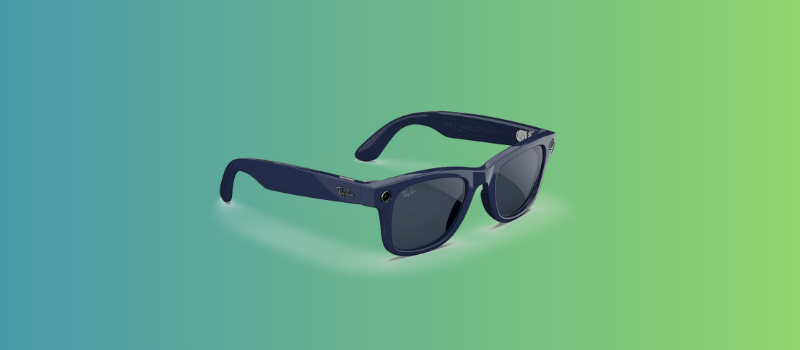
The Wayfarer model in Brilliant Blue that we tested maintains that iconic silhouette that everyone recognizes instantly. No flashy logos or odd shapes, these frames pass perfectly as a conventional accessory. Only a trained eye will notice two details that reveal their true nature: a small circle in a corner of the front (which is the 12 MP camera) and another that functions as a recording LED indicator. The temples are barely thicker than traditional ones, but they do not clash.
This approach of "normality" is not casual. Wearing Ray-Ban Meta glasses on the street doesn’t attract odd glances nor the feeling of using a futuristic prototype. They are comfortable, elegant and perfectly usable for hours without fatigue. The weight distribution is so well resolved that even with all the integrated technology — microphones, speakers, battery — they do not feel bulky or heavy on the bridge of the nose. The autonomy reaches up to 8 hours, which is more than enough for intensive use throughout the day.
Another notable point is the option of optical customization. The Ray-Ban Meta Gen 2 can be ordered with prescription lenses, both through the official site and authorized opticians. It’s an important advantage for users who need vision correction, though you should keep in mind that this choice increases the final price and limits return options. There is also the possibility to include Transition lenses, which adds functionality without sacrificing design.
In terms of storage, these glasses offer 32 GB, enough to capture photos and videos without worrying about space. The content can be easily transferred via the official app, compatible with Android, which also manages device updates.
On the other hand, the charging case has also evolved with very good taste. Far from the technical look of other devices, it now presents itself as a classic sunglasses case, made of a material that imitates leather (available in black or brown). It has a USB-C port at the base and a front LED that indicates the charge level. Its design is as functional as it is aesthetic: protects the glasses, doesn’t clash with the rest of the set and earns points in elegance and practicality.
And what about artificial intelligence? Although not visible, it’s always present, especially when using voice commands for basic functions or to capture content in real time. In short, the design of the Ray-Ban Meta Gen 2 not only meets expectations but shines for its ability to blend into daily life without drawing attention. And that, in a wearable product, is more than a detail: it is a statement of intent compatible with those who seek technology without sacrificing style.
Sound that accompanies, not isolates: the audio and voice experience in the Ray-Ban Meta Gen 2
One of the most interesting —and apt— decisions in the design of the Ray-Ban Meta Wayfarer Gen 2 is its total bet on auditory interaction. Unlike the Display variant, there are no screens, no floating notifications, and no virtual arrows pointing directions on the ground. Everything happens through the ear... and it works surprisingly well.
The speakers, discreetly integrated into the temples, use a directional air conduction technology. This means that the sound is directed directly to the ear canal without the need for headphones or skin contact. The result? Clear audio, with stronger bass presence and greater richness than in the previous generation. You can enjoy music, podcasts or voice instructions without disconnecting from the world. The person next to you barely perceives a slight whisper, which allows private listening without needing to isolate yourself.
This feature makes a big difference for those who need to stay aware of their surroundings. You can walk through the city, cross streets, talk to someone or take a call without feeling you’re in a bubble of sound. The same applies to telework: listening to content while keeping an ear available to what happens around you is a difficult balance to achieve, and here it’s well achieved.
Regarding calls, the Meta Ray-Ban also take a step forward. The system of five strategically distributed microphones captures voice with notable clarity. Even in challenging situations —traffic, wind, crowds— noise cancellation behaves effectively. During our tests, conversations were fluid and without notable interference. Additionally, these same microphones allow recording videos with immersive sound and an acceptable quality up to 1080p, which adds a layer of realism when you play them back with headphones.
But the true "brain" behind these glasses is their AI system, with an integrated virtual assistant: Meta AI. It is activated with the command “Hey Meta” and responds naturally to a variety of orders: from taking a photo to making a call or checking the battery status. The response is quick, the voice is clear, and overall the experience is smooth. That said, there are some curious details: among the available voice options, two feature a fairly marked Galician accent, which may seem odd to some users.
Where there is room for improvement is in the multimodal AI function, the one that promises to see what you see and give you useful information about it. Although at times it can impress — identifying monuments or translating texts in real time — it also makes mistakes, offers imprecise answers or falls short compared to what platforms like ChatGPT or Google Gemini already offer. In short: useful, but not revolutionary yet.
Taken together, the audio and voice experience in the Ray-Ban Meta Wayfarer represents a significant advance. Its directional sound, natural integration with the surroundings, and an AI that, although not perfect, is functional, turn these glasses into a device that adapts to the pace of daily life without interrupting it. And that, in the wearables world, is no small thing.
Integrated camera: capturing life as it happens (with its virtues and limits)
The camera of the Ray-Ban Meta with Gen 2 update is, without a doubt, one of its most attractive features... and also one of the most controversial. Not for privacy or design issues, but for the expectations it creates and what it actually offers. Here we are not dealing with a photographic system meant to dazzle with sharpness or depth of field. Its purpose is another: to capture moments quickly, from a natural point of view, without filters or barriers between you and what you are experiencing.
The sensor is 12 megapixels and comes with an ultra-wide lens. Its main strength is not the resolution, but the immediacy. Just press a discreet button on the temple or say “Hey Meta, record a video” to immortalize what you have in front of you. You don’t need to pull out your phone, unlock it or open any app. You simply look and record. That simplicity makes these glasses a natural extension of your gaze.
The first-person videos, thanks to a greatly improved digital stabilization, convey a sense of immersion that surprises. They are not spectacular in quality, but in authenticity. They have that “real effect” that connects so well on platforms like Instagram or TikTok. And here is one of the keys: these glasses do not aim to compete with professional cameras, but to offer you a direct, effortless way to generate content from your perspective.
That said, when it comes to technical quality, there are nuances.
In broad daylight, the photos perform their function: more than acceptable for social networks. The level of detail is fine for a sensor of these characteristics, but Meta's automatic processing tends to be excessive. Very saturated colors, skies that verge on fluorescent blue, vegetation with artificially intense tones... everything looks more striking, though less real. It’s a visual style that works on mobile screens, but can sometimes feel exaggerated.
At night, the story changes completely. With low light, the camera suffers. The sensor is small and, although it does what it can, digital noise appears quickly and details are lost in dark areas. It is not the ideal device for intimate scenes or environments with dim lighting. Simply, it’s not designed for that.
Another aspect to consider is framing. Not having a viewfinder or screen makes shooting a bit intuitive. You have to learn to "aim with your head," which implies a learning curve. The first photos will likely have subjects cut off or poorly centered, but over time you improve. Like anything, it’s a matter of practice.
The videos are recorded in vertical format —thinking directly for Stories, Reels or TikToks— at a “3K” resolution according to Meta, though in practice it is close to 1440p. They look good on mobile devices, which is where most content ends up being consumed. But don’t expect cinematic quality or shots for high-end post-production editing.
That said, the Ray-Ban Meta Gen 2 camera does not disappoint... if you understand what it’s for. It doesn’t aim to compete with the latest iPhone or replace your DSLR. Its proposition is much more subtle: to let you capture life from your vantage point, quickly, without interrupting the moment. In a context where spontaneous, “imperfect” and authentic content dominates the networks, that approach makes all the sense.

Closed ecosystem, smooth experience: connectivity and app in the Ray-Ban Meta Gen 2
To get the most out of the Ray-Ban Meta Gen 2, you absolutely need to install the Meta View app, the nerve center from which you manage everything: from the initial setup to downloading photos and videos. The app stands out for its clean design and a fairly smooth user experience. It doesn’t overwhelm with unnecessary options and, in general, does its job well.
Once synced, the glasses transfer the content to the mobile via a direct Wi-Fi connection, which translates to surprisingly fast download speeds. This system avoids relying on Bluetooth, which tends to be slower and more limited for multimedia files.
However, the ecosystem has its limits, and here is where the metaphor of the “walled garden” comes in. These glasses are deeply integrated with Meta’s services: Facebook, Instagram and WhatsApp benefit from features tailored almost to measure. If that’s your daily digital environment, you’ll feel right at home.
But if you use other services frequently —such as Telegram, TikTok or voice assistants like Siri and Google Assistant— you’ll quickly notice that compatibility is reduced. There is no native integration with these systems beyond very basic features that can be activated via gestures like long-pressing the temple.
Conclusion: smart glasses that you can —and want to— actually use
The Ray-Ban Meta Gen 2 represent a step forward in what should be a smart wearable: functional, discreet and well integrated into daily life. They do not seek to impress with overwhelming technical specifications, but to offer a coherent experience focused on natural use.
The design is, without a doubt, one of its greatest achievements. They look like conventional glasses, they feel comfortable, and they don’t draw attention for their technology. The directional sound allows you to stay connected without isolating yourself from the surroundings, and voice interaction — though still with room for improvement in its AI — adds a layer of convenience hard to match.
The camera, without being perfect, meets its goal: to capture moments instantly, from your viewpoint and without interrupting the action. And although the quality doesn’t compete with the best smartphones, what it offers is authenticity, something increasingly valued in the era of ephemeral content.
Yes, there are limitations in connectivity and ecosystem, especially if you’re not immersed in the Meta universe. But overall, these glasses manage to do something that few similar devices have achieved: to be useful, comfortable and socially acceptable. And that, today, is already a lot to say.


.png)