When it comes to treating respiratory conditions such as asthma, bronchitis, or COPD, having an effective nebulizer can make a significant difference in the patient's quality of life. These devices allow medications to be delivered directly and quickly to the lungs, facilitating a more comfortable and efficient recovery. However, not all nebulizers offer the same level of performance or fit the same needs. Choosing the most suitable one requires understanding not only how they work but also what specialists think about their features and clinical applications.
Doctors and health professionals typically have clear criteria when recommending a nebulizer, whether for pediatric use, adult use, or for patients with specific conditions. Factors such as accuracy in medication delivery, ease of use, portability, or noise level can be decisive when making an informed decision.
In this article you will find a comprehensive guide with the most reliable specialist recommendations, a comparison of the most common types, and an analysis of the models most valued for their effectiveness. If you are looking for a nebulizer that truly fits your needs, keep reading and discover which one might be the most suitable for you.
What is a nebulizer and what is it for?
A nebulizer is a medical device designed to transform liquid medications into a fine mist that can be inhaled easily through a mask or mouthpiece. Its main goal is to facilitate direct administration of the drug to the airways, allowing rapid and effective absorption, especially in patients with breathing difficulties.
The operation of the nebulizer is simple, but highly effective. The medication, previously prescribed by a health professional, is placed in a small reservoir inside the device. Through a compressor or ultrasonic system, the liquid is converted into microscopic particles that the patient inhales for several minutes. In this way, the treatment acts directly on the lungs, without passing through the digestive system, which improves its efficacy and reduces possible systemic side effects.
There are different types of nebulizers (compressor, ultrasonic, mesh), but they all share this essential function: to deliver the medication directly to the airways quickly, comfortably, and safely.
Common uses in respiratory treatments
Nebulizers are widely used in the treatment of various respiratory system conditions, both acute and chronic. Some of the most frequent include:
- Asthma: They help control respiratory attacks by delivering bronchodilators or anti-inflammatory medications that act quickly.
- Bronchitis: They facilitate bronchial decongestion and reduce inflammation of the airways.
- COPD (Chronic Obstructive Pulmonary Disease): They help improve oxygenation and reduce symptoms in people with chronic respiratory diseases.
- Respiratory allergies: In certain cases, they are used to administer medications that reduce inflammation caused by allergens.
One of the most notable aspects of the nebulizer is its versatility across different age groups. In young children, its use is common because they cannot yet coordinate inhalation with other devices such as metered-dose inhalers. In adults, it is useful in crisis situations or when prolonged treatment is required. And in older people, its ease of use and effectiveness make it a safe option, especially for those with physical or cognitive limitations.
Types of nebulizers: which one is best for you? The recommended ones
When choosing a nebulizer, it is essential to know the differences between the different types available on the market. Each model has technical features that make it more or less suitable depending on the patient’s age, the disease being treated, the frequency of use, and even lifestyle. Below, we explain the three main types of nebulizers and their most common applications.
Piston or compressor nebulizers
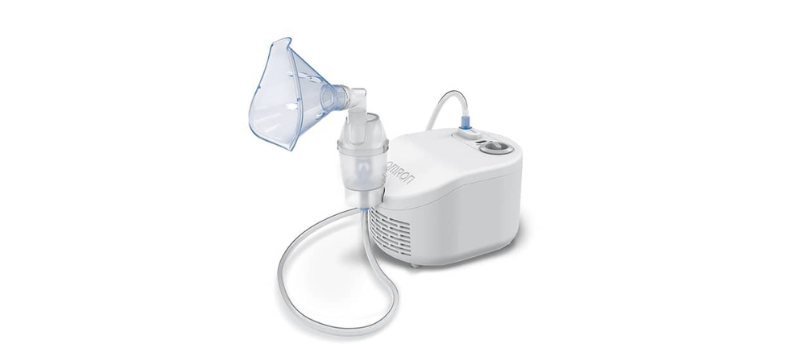
Piston nebulizers — also known as compressor nebulizers — are the most traditional and, at the same time, the most widely used in clinical and home settings. They operate with a compressor that generates compressed air, which passes through the liquid medication and turns it into a fine cloud of inhalable particles.
Advantages:
- Compatible with a wide variety of medications, including solutions with denser suspensions.
- Generally more economical than other options.
- Reliable and durable for long-term use.
Disadvantages:
- Tend to be noisy, which can be bothersome, especially in young children or people sensitive to sound.
- Bulky and less practical to transport.
- Longer nebulization time compared to other technologies.
Who is it recommended for?
Ideal for regular home use, patients with chronic diseases such as asthma or COPD, and those who need frequent treatments with different types of medications. They are also a good option for older adults or children who require supervision during nebulization.
Ultrasonic nebulizers
These devices use ultrasonic vibrations to turn the medication into vapor, without the need for compressed air. Their technology allows for quieter nebulization and, in general, faster performance.
Key features:
- Operate with less noise, improving the user experience.
- They are more compact and lighter than piston compressor nebulizers.
- Faster nebulization speed.
Ideal user type:
They are designed for those seeking a portable and quiet unit, ideal for use outside the home or during travel. However, not all medications are compatible with this technology, as some active ingredients can degrade due to the heat generated in the process. Therefore, their use is usually more focused on less complex treatments or patients with specific mobility needs.
Mesh or vibrating mesh nebulizers
Mesh nebulizers represent the most advanced technology in this field. They use a vibrating mesh with micro-perforations that converts the liquid medication into aerosol efficiently and uniformly.
Main advantages:
- Are very quiet, practically imperceptible in operation.
- Portable, lightweight and easy to carry in a bag or backpack.
- Fast and efficient nebulization, with less medication waste.
- Suitable for most drugs used in respiratory therapy.
What makes them different?
The combination of efficacy, comfort, and compact technology makes them the preferred option for those who need frequent treatments without sacrificing mobility. They are especially useful for pediatric patients, active adults, and people who require discretion when performing their treatment in public spaces.
What do specialists say? Key recommendations
Choosing a nebulizer should not be based solely on price or the device's appearance. According to pulmonology specialists and respiratory health professionals, there are fundamental technical and medical criteria that must be considered to ensure effective and safe treatment. Below, we explore the most relevant recommendations shared by experts.
Characteristics a good nebulizer should have
The specialists agree that a good nebulizer should meet three essential aspects: reliability, ease of use, and easy maintenance.
- Reliability: A reliable device should offer consistent and effective nebulization, without interruptions or technical faults. The device's ability to generate particles of the correct size (between 1 and 5 microns) is crucial, as only then can the medication reach the lungs properly.
- Ease of use: The nebulizers recommended by professionals typically stand out for their intuitive design. This is especially important for older patients or people with reduced mobility. The assembly of the parts, turning on, and the operating time should be as simple as possible.
- Easy maintenance: A device that is easy to clean and disinfect reduces the risk of respiratory infections. Specialists recommend models that allow easy disassembly of components and provide clear instructions for daily care.
Medical criteria for choosing the right device
Each patient has different needs, which is why doctors consider several factors before suggesting a specific type of nebulizer:
- Type of disease: In chronic cases such as asthma or COPD, a robust nebulizer compatible with different medications is preferred. For temporary conditions, like a specific bronchitis, a more basic model may suffice.
- Patient age: Young children, for example, often require quiet devices with appropriately sized masks. In older adults, the priority is ease of use, while teenagers or active adults may benefit from portable devices like mesh ones.
- Frequency of use: For daily treatments, a durable nebulizer with good autonomy and long operating cycles is recommended. In patients who only use it occasionally, a compact model may be enough.
Practical tips before buying
Before acquiring a nebulizer, health professionals recommend following some key steps to ensure a good choice:
- Consult your doctor: It is always advisable to speak with a specialist who knows your medical history and can indicate which type of nebulizer best fits your condition.
- Read verified opinions: Checking other users' experiences can help you identify potential advantages or drawbacks of the model you are considering.
- Check the warranty and the technical service: Good manufacturer support is essential in case of faults or replacements. Opting for brands recognized in the medical sector is usually a safer choice.
- Evaluate the availability of spare parts: Nozzles, masks, and filters should be easily replaceable. The lack of parts can shorten the device's lifespan.
The most effective nebulizers according to professionals
Choosing a nebulizer may seem simple, but when it comes to respiratory health, the quality and performance of the device make the difference. Therefore, many professionals in the medical field agree on recommending certain models that have proven to be especially effective, both in clinical settings and home use.
Below are some of the nebulizers best rated by specialists in pulmonology and general medicine. Each stands out for particular features that make it ideal for different user profiles.
Omron NE-C28P CompAIR
Brief technical data:
- Type: Compressor (piston)
- Particle size MMAD: 3 µm
- Nebulization rate: 0.4 ml/min
- Noise level: Moderate
- Accessories: Adult mask, child mask, mouthpiece, air tube
- Weight: 1.9 kg
Why do professionals recommend it?
The Omron NE-C28P is one of the most used models in medical offices and also one of the most reliable in homes with chronically ill patients. Its power and compatibility with most medications make it ideal for ongoing treatments in people with asthma, COPD, or recurrent bronchitis.
Doctors particularly value its stable performance, even with daily use, and its ability to generate particles of the right size to reach the lower airways. Although it is not the quietest or the most compact, its clinical efficacy makes it a priority option for serious and frequent treatments.
Philips InnoSpire Go
Brief technical data:
- Type: Vibrating mesh
- Particle size MMAD: 3.99 µm
- Nebulization rate: 0.27 ml/min
- Noise level: Very low
- Autonomy: Up to 30 treatments per charge
- Weight: 111 g
What makes it stand out?
The Philips InnoSpire Go is one of the preferred options among professionals who prioritize portability, convenience, and quiet technology. Thanks to its compact design and its nearly imperceptible operation, it is ideal for active adults, teenagers, and people who need to perform treatments anytime and anywhere.
This model has a rechargeable battery and is controlled with a single button, which simplifies use even for older patients or those with little experience with medical devices. Specialists highlight its clinical efficacy comparable to larger nebulizers, making it an excellent alternative without sacrificing performance.
Beurer IH60
Brief technical data:
- Type: Portable compressor
- Particle size MMAD: 5 µm
- Nebulization rate: 0.25 ml/min
- Noise level: Low
- Autonomy: USB-rechargeable
- Weight: 220 g
- Designed for specific needs
Beurer IH60 presents itself as a practical solution for users who need a compact yet robust nebulizer. Although it does not use mesh technology, it offers good effectiveness thanks to its compressor system adapted for portable use.
It is especially recommended by professionals for people who move between home and work, or who travel frequently. It is also useful in settings where a reliable unit with limited space is required. Despite its small size, it maintains good nebulization levels, making it functional for regular treatments.
Omron MicroAir U100
Brief technical data:
- Type: Vibrating mesh
- Particle size MMAD: 4.5 µm
- Nebulization rate: 0.25 ml/min
- Noise level: Practically silent
- Power source: AA batteries or adapter
- Weight: 120 g
Why do some specialists choose it?
The Omron MicroAir U100 is valued for its energy flexibility and extreme portability. It runs on standard batteries, making it ideal for emergencies, outings, or areas without immediate access to electricity. Although its nebulization rate is moderate, its mesh technology makes it efficient in delivering medications.
Doctors especially recommend it for children and older adults who need a simple and quiet device, as well as for patients with respiratory allergies who must nebulize outside the home. Its ergonomic design and easy cleaning are also advantages.
Medel Family Plus
Brief technical data:
- Type: Compressor
- Particle size MMAD: 2.44 µm
- Nebulization rate: 0.3 ml/min
- Noise level: Medium
- Includes: Pediatric and adult accessories
- Weight: 1.65 kg
- Recommended for the whole family
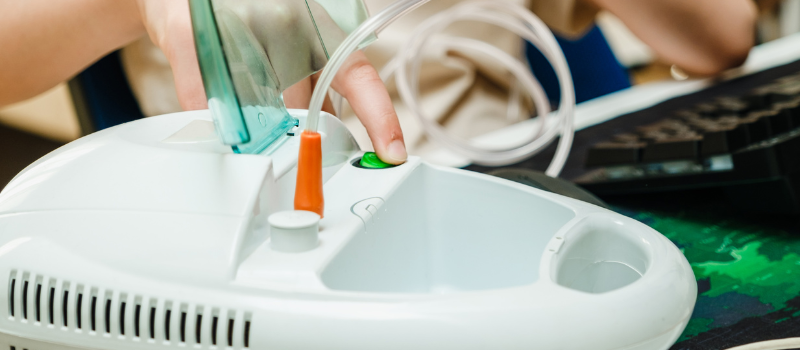
This model has been highlighted for its versatility. Health professionals suggest it when treatment must be shared among multiple family members, as it includes masks for different ages and a good balance of efficacy and ease of use.
Its power and stability make it a complete option for the home, especially in families with a history of respiratory diseases.
Conclusion: choose the nebulizer that best fits your needs
Having a good nebulizer can make a big difference in the treatment of respiratory diseases, both in acute situations and in chronic conditions. Throughout this article we have explored the different types of devices, their technical characteristics, experts' recommendations, and models that stand out for their effectiveness, reliability, and ease of use.
If you are looking for the best nebulizers for yourself or a family member, it's important to consider not only the quality of the equipment but also its suitability to the patient profile. For example, a portable nebulizer can be the best solution for those who need to take their treatment outside the home or prefer a more convenient and quieter option.
In specific cases, such as for older adults, there are portable nebulizers for seniors that adapt to their needs: easy to use, light, and with ergonomic masks. There are also those who require specific treatments with nasal nebulizers, ideal for effectively and directly decongesting the upper airways.
Each patient is unique, and that is why it is essential to choose a device that fits not only the medical diagnosis but also the lifestyle, age, and frequency of use. Whether a home device or a compact model, there are effective solutions endorsed by health professionals.
Before making a decision, remember to consult with your trusted doctor, review the specifications of each model, and ensure it meets quality standards. Choosing the right nebulizer not only improves treatment effectiveness but also provides greater comfort, autonomy, and peace of mind.
Investing in a good nebulizer is an investment in respiratory health, well-being, and quality of life.

.png)