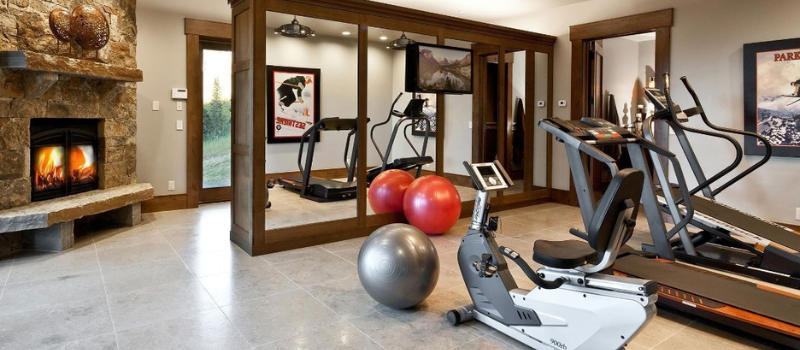
A home gym is not just a corner with a couple of weights and a mat; it's a space designed to motivate you, so that training becomes part of your daily routine without relying on commutes, fixed schedules, or monthly fees. The idea sounds tempting, but many believe that to achieve it you need a big budget or a whole room filled with professional machines. The reality is very different: with planning and a practical approach, it is possible to create an efficient place to exercise with minimal investment. The objective is not to compete with a sports center, but to build a functional environment tailored to your goals and the space available. A corner of the living room, the balcony, or even a room you barely use can be transformed into your ideal training area. In the end, what defines a home gym is not the number of appliances, but how you take advantage of each element and how you integrate it into your daily life.
In this guide you'll discover how to organize it, what equipment is really useful, and how to save without sacrificing.
Benefits of having a home gym
Having a home gym is not just a matter of convenience; it is also a smart way to optimize resources, tailor training to your lifestyle, and remove barriers that often hinder consistency. Whether you aim to improve your endurance, gain strength, or simply stay active, having your own space to work out offers advantages that are noticeable from day one.
Time and money savings
One of the most evident benefits is the reduction of expenses and commuting. You won’t have to pay monthly fees at a gym or invest in transportation. Moreover, the time you used to spend commuting can now be used for more minutes of exercise or for other activities that contribute to your well-being. Although the initial investment in equipment may seem significant, in the medium and long term it translates into a considerable savings.
Train at any time
With a home gym, the clock stops being an obstacle. You can train early in the morning, during your lunch break, or even at night, depending on your schedule. This flexibility is key to maintaining consistency, as it removes the pressure to fit into fixed schedules or to share the space with dozens of people at the same time.
Comfort and privacy
Your home becomes a safe and familiar place where you can train without feeling watched or affected by the external environment. There are no waiting times to use a machine or the need to adapt to the gym’s music or temperature. You can also customize the space to your liking: choose the lighting, the type of music, and the layout of the equipment. That sense of control and comfort supports motivation and makes it easier for training to become a habit. It also highlights how to maintain motivation so that this project becomes a durable investment in your well-being.
Plan your home gym
Before buying equipment or moving furniture, it is essential to design a plan that fits your needs and possibilities. A home gym is not built only with objects, but with a strategy that combines space, budget, and clear goals. Good planning will save you unnecessary costs and allow you to create a functional place that truly motivates you to train.
Define your training goal (strength, cardio, flexibility)
The first step is to be clear about what you want your home gym for. It isn’t the same to prepare a space for developing strength as for improving cardiovascular endurance or flexibility.
- If your goal is strength, you'll need elements such as dumbbells, bars, plates, and perhaps a weight bench.
- For cardio, you’ll suffice with options like a jump rope, a stationary bike, or even open space for high-intensity workouts.
- If you’re seeking flexibility, the ideal would be to have mats, resistance bands, and accessories that facilitate stretching.
Defining your goal from the start will prevent you from spending on equipment you won’t use later.
Choose the ideal space in your home
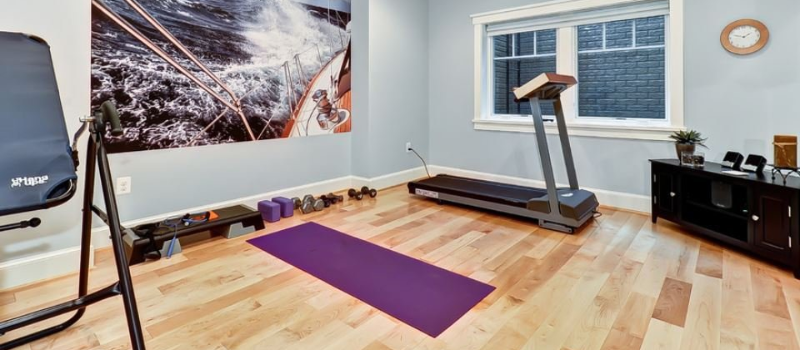
The size of the home gym isn’t the most important thing; what really matters is that it’s practical, well-ventilated and free of distractions. It can be a corner of the living room, a garage, an empty room, or even a part of the balcony. The key is that it’s a reachable place, with enough lighting and that allows you to move your body without limitations. If possible, opt for a space you can customize to make it more motivating.
Budget: how much to invest at the start
A common mistake is thinking that you need a large sum of money to set up a home gym. The truth is you can start with a minimal investment and expand the equipment over time. Make a priority list of what you’ll actually use according to your goal and start with the essentials. Buying second-hand products, taking advantage of offers, or turning to homemade alternatives can significantly reduce initial costs. The important thing is to invest wisely, focusing on quality and durability to avoid frequent replacements.
Basic equipment to start
Setting up a home gym doesn’t mean filling a room with expensive machines or investing all your budget in state-of-the-art equipment. The key is to choose versatile, durable tools tailored to your training goals. With a few well-chosen items you can perform a wide variety of exercises that work the entire body, keeping motivation high and not relying on external facilities.
Next, we’ll review the essential equipment to take your first steps in home fitness conditioning.
Adjustable weights and dumbbells
Weights are one of the pillars of strength training. Including adjustable dumbbells in your home gym will allow you to work different muscle groups and adjust the load to your level. The advantage of being adjustable is that you don’t need several pairs of fixed dumbbells; with a single set you can modify the weight according to the exercise and your progress.
Their versatility is huge: they’re suitable for toning arms, strengthening shoulders, working chest and back, and even performing leg routines with squats or lunges. Additionally, they take up little space and can be easily stored in a corner.
If you can’t invest immediately in a professional set, there are cheaper alternatives such as sand-filled dumbbells or reused water bottles. Although they don’t offer the same durability, they’re a temporary solution while you gather the budget for more solid equipment.
Resistance bands
Elastic bands are a lightweight, affordable, and very effective resource. They not only help to work strength and endurance, but are also excellent for warming up muscles, improving mobility, and facilitating stretches. Their main advantage is that they offer different tension levels, which makes them ideal for beginners and more advanced athletes.
There are several types:
- Long bands for leg, back, and chest exercises.
- Mini bands for glutes and hips.
- Bands with handles that simulate the movement of some gym machines.
They are easy to transport, don’t take up space, and allow training practically anywhere in the house. Plus, since they don’t create impact, they’re an excellent option for people recovering or looking to protect their joints.
Exercise mat or mat
This item may seem simple, but it makes a big difference in comfort and safety of your workouts. A high-quality mat protects your joints when performing floor exercises such as sit-ups, planks, stretches, or yoga. It also prevents slipping and helps maintain hygiene by creating a clean surface to train on.
It’s important to choose a non-slip model with the proper thickness: too thin can feel uncomfortable and a very thick one could hinder balance in certain exercises. A thickness of between 6 and 10 millimeters is usually ideal for most routines. The advantage is that, being light and rollable, you can store it in a closet or under the bed without taking up space. Also, with a simple mat and your body weight you can perform complete workouts that work all muscle groups.
Economical cardio option: jump rope, used stationary bike or used elliptical
Cardiovascular training is essential to improve heart health, increase endurance, and burn calories. Fortunately, you don’t need to invest large sums to have an effective cardio option at home.
The jump rope is probably the most economical and efficient tool. With just a few minutes a day you can activate your entire cardiovascular system and work coordination, speed, and leg strength. It’s portable, light, and perfect for short but intense workouts. If you prefer a more stable setup, a used stationary bike can be an excellent choice. Look for models in good condition that have been well cared for; they are often available at affordable prices on second-hand platforms. The bike is ideal for low-impact training, which protects joints, and allows you to adjust resistance to tailor the exercise intensity.
Another option is the elliptical, which combines arm and leg movement, offering a full-body workout. Although it takes up more space, buying it second-hand can save up to 60% off the original price. It’s a perfect option for those who want to work cardio without impact and maintain the body’s natural posture.
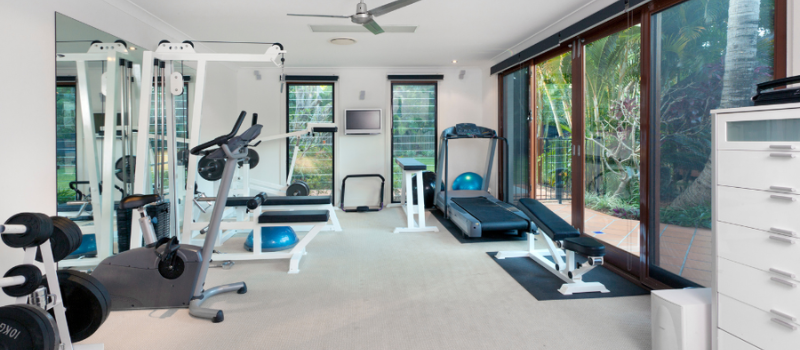
Set up your gym step by step
Having the basic equipment is only half the job. For your home gym to be truly functional, you need to organize it in a way that invites you to train and makes you feel comfortable from day one. A well-thought-out space improves motivation, safety, and the efficiency of each session.
Prepare the space (cleaning, lighting, ventilation)
Before placing the first accessory, take time to prepare the area where you will train. Start with a thorough cleaning to eliminate dust and objects that may get in the way or pose a risk. If the floor is hard, consider using protective mats to cushion impacts and protect the equipment. Lighting is key: natural or white light helps maintain energy and concentration. If the place is dark, install LED lamps that do not generate excessive heat. Ventilation is also essential. If you don’t have windows, place a fan or an air purifier to keep the environment fresh and pleasant.
Organization of the equipment
Keeping the equipment organized not only saves space, it also prevents accidents. Use shelves, racks, or boxes to store bands, mats, and small accessories. If you have dumbbells, a stand or dedicated shelf will make access easier and prevent them from lying on the floor. Visual organization influences your willingness to train: when everything is at hand and in its place, it’s easier to start and less likely you’ll look for excuses not to do it.
Motivating decoration (mirrors, phrases, good music)
The environment is a factor that is often overlooked. Placing a large mirror not only helps you correct technique, it will also make the space look more spacious and bright. Including motivational phrases on the wall or a board to note your progress can reinforce commitment. And, of course, music: having a speaker or sound system will allow you to create the perfect atmosphere for each type of workout, from intense sessions to more relaxed routines.
Conclusion
Setting up a home gym isn’t a luxury reserved for a few, but a real and accessible possibility for anyone who wants to take care of their health and stay active. With good planning, smart equipment selection, and a well-adapted space, it’s possible to create an efficient training environment without overspending or sacrificing the comfort of home. The most valuable thing about a home gym is that it adapts to you: your schedule, your level, and your goals. There are no lines to use a machine, no external distractions, and you can train with the music, pace, and intensity you prefer. Every detail you incorporate, from a simple jump rope to a motivational mirror, contributes to making exercise a natural part of your daily routine.
Taking this step is an investment in your physical and mental well-being. It doesn’t matter if you start with little; the important thing is to begin and stay consistent. Over time, you’ll notice that your home gym is not just a place to exercise, but a space that fosters discipline, confidence, and energy to tackle the day. Your health and motivation will thank you.



.png)