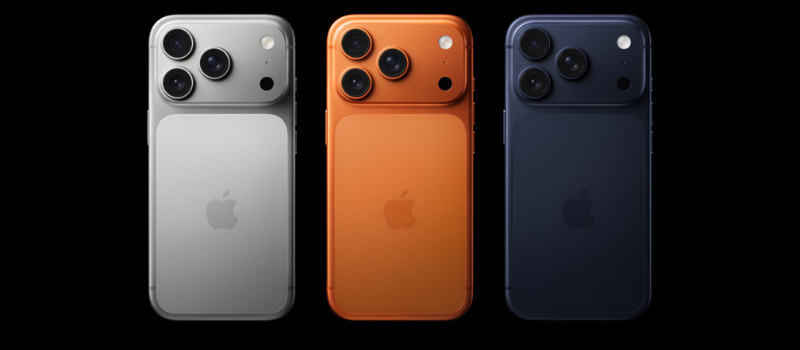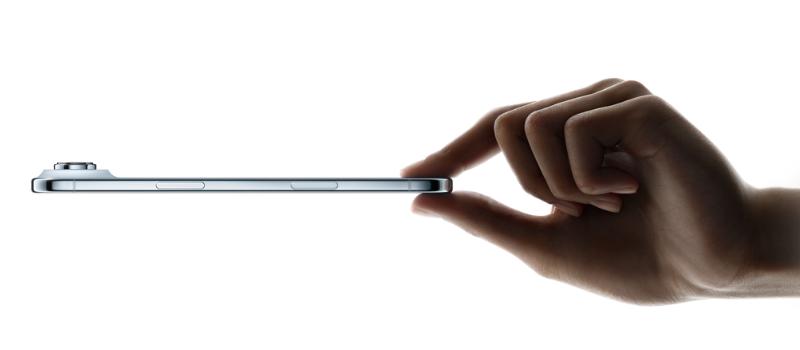
When Apple launches a new iPhone model, the attention of the tech world inevitably focuses on its details, innovations and —of course— on the sensations it generates in users. The iPhone Air is no exception. In fact, one could say this device has gone a step beyond what was expected. Not only for its ultra-thin design, which sets a new standard within the iPhone family, but also for what it represents conceptually: lightness, elegance and a minimalist approach taken to the extreme.
In this review I will share my real experience with the iPhone Air after several days of intensive use. This is not about repeating technical specifications you can find on any product sheet, but about evaluating how this iPhone performs in daily use: its performance, its autonomy, the quality of its display, and, of course, whether that very thin design compromises —or not— its durability and functionality.
Are we looking at a tech jewel or simply at a more aesthetic version with few real advances? In the following lines I will answer that question with clear arguments, concrete tests and an honest opinion. This way you can decide if it’s really worth betting on the most delicate iPhone Apple has created so far.
Ultralight design that surprises from the very first moment
You may think first of its slimness when you hear “iPhone Air,” but the real impact comes when you hold it for the first time. Yes, it is thin —the thinnest Apple has created so far—, but what really makes the difference is its weight. At only 156 grams, this device redefines what we understand by “lightness” in a high-end mobile. And if you’ve spent time with smartphones weighing between 180 and 220 grams, you’ll notice the change instantly.
When you take it out of the box, the first thing that stands out is its minimalist profile, but in the hand, the lightness takes center stage. It’s a strange sensation at first, almost disconcerting, but with daily use it becomes a very clear advantage. Using it during long sessions, watching content, gaming or simply browsing social networks feels much more comfortable. And yes, the body adapts quickly... and then it’s hard to go back.
What’s surprising is that, despite its slenderness, it doesn’t feel fragile. On the contrary, the iPhone Air feels solid, well built, with no obvious weak points. Apple has done an excellent job of internal compacting, and the choice of materials is noticeable: the titanium frame gives it that premium touch, although it has a small aesthetic defect… it gets dirty easily. If you’re meticulous about cleaning, you’ll notice it right away.
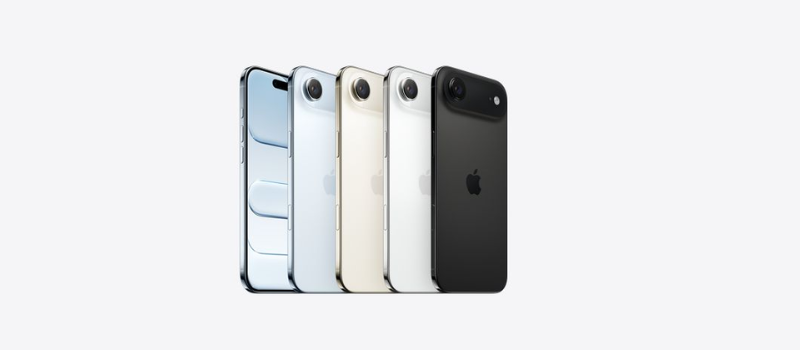
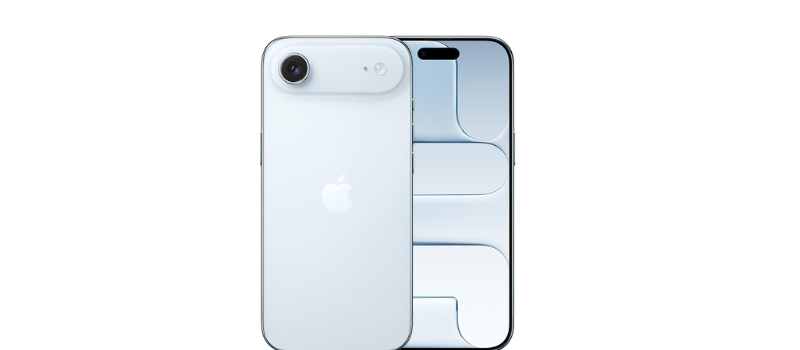
The back, on the other hand, offers a clean and smooth texture that resists fingerprints quite well. However, the camera module —located on what Apple calls “the plateau”— does accumulate marks easily, especially in the black model. In addition, this module houses not only the cameras, but practically all internal components, except the battery and some circuits. Its stepped design creates a curious effect: the phone wobbles when placed on a flat surface, even with a case.
Speaking of ergonomics, its thickness doesn’t dig into the hand as one might think. Although using it with one hand remains difficult due to its overall size, the grip is comfortable and doesn’t present issues during prolonged use.
In short, the iPhone Air combines lightness, elegance and solidity in a design that not only looks good but also feels good. It may not be a design for everyone, but those who seek comfort without sacrificing build quality will find something special here.
A high-level display, though not perfect
Apple rarely disappoints when it comes to displays, and with the iPhone Air it has once again shown that it knows well what it’s doing in this department. The device features a 6.5-inch OLED panel, positioning itself between the iPhone 17 Pro and Pro Max in size, which gives it an interesting balance between portability and immersive visual experience.
The resolution reaches an intermediate level with its 1.5K, enough to offer a density of 460 pixels per inch. What does that mean in daily use? Sharp images, text perfectly defined and a sense of clarity that leaves no room for complaints. ProMotion technology is also present, allowing the refresh rate to adapt to the content you are viewing: it can reach up to 120 Hz when maximum fluidity is needed or drop to 1 Hz when the screen doesn’t require constant motion. This, in addition to offering a smooth visual experience, contributes to energy savings, something the iPhone Air greatly appreciates.
In terms of visual quality, the panel is outstanding: vibrant yet balanced colors, deep blacks thanks to OLED, and brightness that adapts very well to different situations. Outdoors it reaches up to 3,000 nits, which allows viewing content without issue even under direct sunlight. In HDR content, it reaches peaks of 1,600 nits, and standard brightness hovers around 1,000 nits, more than enough for indoor use.
That said, after several minutes in bright light and with brightness at maximum, the device begins to heat up and the brightness drops slightly to protect the system. Nothing alarming, but it is a detail to consider for the hotter months.
Apple has included an anti-reflective film to reduce unwanted glare, but its effect is quite subtle. Compared to advances we’ve seen in Samsung devices, this attempt falls short. On the other hand, the oleophobic coating that protects the screen works better: it considerably reduces fingerprints, though it doesn’t eliminate them completely.
Finally, the haptic response is correct, but inferior to other models from the brand. If you enjoy the vibration when typing or interacting with the interface, you may miss that precise and refined feel of the Pro models. Here you can tell there has been a small cut, probably to adjust weight or internal space.
Sound: a weak point that does not go unnoticed
If there’s one aspect where the iPhone Air leaves quite a bit to be desired, it’s the sound. Unlike most current smartphones, which usually include two speakers to offer stereo audio —one at the bottom and one at the top—, this model has a single speaker, located right above the Dynamic Island. And yes, that single speaker is responsible for everything: calls, music, videos, WhatsApp audio, whatever.
The result is what you’d imagine. The sound lacks power and body. When you turn up the volume, it’s easy to notice a very evident distortion, especially in music or videos with pronounced bass. The audio becomes flat, with no depth or balance, and in some cases, outright annoying. There’s no punch, there are no basses, and the maximum volume isn’t especially high. In short: it’s not a phone to enjoy without headphones.
But the most uncomfortable thing isn’t just the quality, but the overall experience. With a single audio channel, there is no real stereo sound. If you rotate the phone to watch a movie or play, the sound still comes from a single point, breaking immersion. It’s like watching a movie with only one earbud working: you can do it, but you lose all the fun.
In calls, at least, the performance is correct. It’s clear and the microphones pick up the voice without issues. That said, if you use the speaker in a noisy environment, things change. The sound easily gets lost among background noise.
Powerful performance, but with a thermal Achilles' heel
The iPhone Air may be the thinnest iPhone yet, but that doesn’t mean it skimp on power. Inside it houses the Apple A19 Pro chip, the same as mounted in the most advanced models like the iPhone 17 Pro Max, albeit with a small difference: its GPU has one fewer core. The consequence? In daily use, practically none. Apps run smoothly, games run without stutters, AI-based features go like a rocket and everything moves with the same agility as in an iPhone 16 Pro.
This processor is not only powerful, it also stands out for its energy efficiency. Idle consumption is minimal, which helps to preserve battery, even with tasks like social networks, photo editing or Safari browsing. In tests with demanding games like 'Delta Force', the iPhone Air shows excellent performance… until heat comes into play.
And the absence of liquid cooling —present in the Pro models— takes its toll. When recording in 4K or playing for long periods, the upper area, also called the “plateau”, gets quite hot. This part of the device, coated with Ceramic Shield, houses most of the components, which causes a drop in performance to avoid overheating. In tests like 3DMark, you can clearly see how the FPS drops after the first cycles.
The good news is that, after a few minutes, the iPhone Air returns to its temperature without issue. That said, it isn’t a device aimed at the more “gamer” audience. Its strength lies in versatility, multitasking, speed in opening apps and good handling of background processes, all thanks to its 12 GB of RAM.
It’s also appreciated that it includes 256 GB of internal storage as base. Although it does not support a physical SIM —it only works with eSIM—, that will only be a problem for those who frequently switch phones. For the rest, it’s another point in favor of this device designed for those seeking a thorough review of a smooth, elegant and comfortable experience.
If you’re coming from an older phone like the iPhone 6, you’ll notice a huge leap in display, performance and design. No doubt: we’re looking at one of Apple’s most balanced and refined devices in the lineup.
iOS 26: fast, smooth and… visually controversial
The iPhone Air arrives with iOS 26, a version of the operating system that doesn’t leave anyone indifferent. Apple has decided to take a risk with a visual redesign that includes the new "Liquid Glass" style, an aesthetic with transparencies, reflections and bright edges that will probably split users. You either love it, or you simply disable it after a few days. There aren’t many middle-ground options.
These are our first impressions, and the truth is that, performance-wise, little can be criticized: iOS remains a well-oiled machine. Animations are fluid, opening apps is instant, and overall stability is impeccable. During use, no errors or bugs were detected. Once again, Apple demonstrates its mastery in software optimization.
The interface, however, has not convinced everyone. Some native apps like Safari or the rear camera have been redesigned. Although visually they look attractive, their usability has been affected. For example, now accessing basic functions of the single camera may require more steps, which does not favor the user experience.
The design with VisionOS-inspired touches aims to unify styles across devices, but on a slimmer iPhone like this, with a more compact screen, that overloaded aesthetic can become impractical. Added to that is that icons, especially in dark mode, look less defined and somewhat blurry. The brightness of the edges can also be uncomfortable.
Functionally, there are features worth noting. The new smart call filter can automatically block unknown numbers or ask the caller to indicate the reason for their call before the phone rings. A useful feature, though with risks if you expect urgent calls from contacts you don’t have saved.
Also notable is the "Sweep to search" function, which lets you select part of the content on screen to initiate a contextual search. Fluid, precise and very intuitive, it is one of the most practical tools of this new version.
Regarding AI integration, Apple Intelligence introduces improvements such as transcription of voice notes, drafting suggestions and other useful features. However, the new AI-based Siri is still not available, and that leaves the impression that Apple is behind in this race.
A negative point that does not go unnoticed is the use of USB 2.0. On a phone costing more than a thousand euros, and with cutting-edge technology like Ceramic Shield 2, this detail feels like a step back. While you won’t notice it if you use AirDrop, when transferring large files by cable, the speed difference is evident.
Moderate battery life and modest charging: a battery with no surprises
When we talk about a phone as thin and light as the iPhone Air, it’s inevitable to think that the battery will be its weak point. And although expectations were fairly low, the reality has been better than expected. That said, let’s lay the cards on the table: this is not a device designed to endure marathon days of heavy use.
The iPhone Air incorporates a 3,149 mAh battery, a modest figure compared with other high-end mobiles. In practice, this translates to about 4.5 to 5 hours of active display under mixed use. In lighter scenarios, it’s possible to reach 6 hours, but that number falls quickly when use becomes intense. During tests, activities such as downloading heavy resources, watching streaming videos or recording in 4K noticeably reduced endurance. For example, downloading HD data for a game like Delta Force dropped the battery by 13% in just 15 minutes, and watching an episode of anime in streaming consumed 3% of battery.
Under normal conditions, the phone lasts until the end of the day if you use it moderately. But if you like to game, record a lot of content or travel and need the phone to accompany you for hours, you’ll have to be more mindful of the battery percentage than in other models. In the long term, the logical worry is how degradation will affect it. And if the autonomy is already fair from day one, what will happen in two years?
It’s notable that Apple hasn’t yet invested in silicon-carbon batteries, a technology that is starting to be seen in high-end Android phones and that allows more capacity in less space. The iPhone Air would be the ideal candidate to debut something like that, but for now, we’ll have to wait for future generations.
Regarding charging speed, there is a maximum of 20W. It isn’t fast compared to what the competition offers, but it does the job: in 30 minutes it reaches 50% and a full charge takes about an hour and a half. That said, during charging you notice a higher temperature rise than expected, even though it isn’t alarming.
Apple also offers a MagSafe external battery for around 115 euros. It fits perfectly with the iPhone Air’s design, but it does not offer a full charge: with its own 3,149 mAh, it barely manages to recharge the phone up to about 70%, due to energy loss in the transfer.
Conclusion: the iPhone Air is a brave bet... and very well executed
The iPhone Air isn’t just another iPhone. It’s a statement of intent from Apple: to show that you can offer a premium experience in a light, thin and elegant format, without losing the essence of what makes an iPhone special.
Yes, there are sacrifices. The sound isn’t the best, the battery doesn’t break records and the iOS 26 design may not appeal to everyone. But in exchange, we have a device that feels different, that bets on a practical and refined approach, ideal for those who value comfort, minimalist design and a solid operating system like few others.
Performance is excellent, the display lives up to high-end standards, and integration with the Apple ecosystem remains one of its strongest points. It isn’t a phone designed for those who push their device to the limit every day, but for the vast majority of users who seek fluency, style and balance, the iPhone Air represents a highly advisable option.
Apple has taken a risk by creating an iPhone like this, and the result is convincing. It may not be perfect, but it’s probably the most comfortable and pleasant iPhone to use in a long time. If that’s the kind of experience you want, here you have a winning bet.

.png)