Since Apple hinted at its first images —almost as if dropping a hint without saying anything— the internet has been filled with rumors, leaks, and theories. Some call it “the most advanced iPhone in history,” others simply say it’s “more of the same with another fancy name.” But, what is the truth behind Apple's new flagship?
In this article you won't find a repetition of the spec sheet that everyone copies and pastes. Nor will we disguise reality with empty adjectives. What you'll read here is an honest review, written after several days of real-world use. We put it to the test in daily life, in common situations and also in those details that often go unnoticed... but that make a difference.
Is the iPhone 17 Pro a revolution or simply a well-masked evolution? Let's find out.
Design and in-hand feel: the iPhone 17 Pro breaks the mold (and the rules)
The design of the iPhone 17 Pro is, without exaggeration, one of its big surprises. Not so much for the shape —which follows the classic Pro lineup— but for the small details that completely change the experience of holding it.
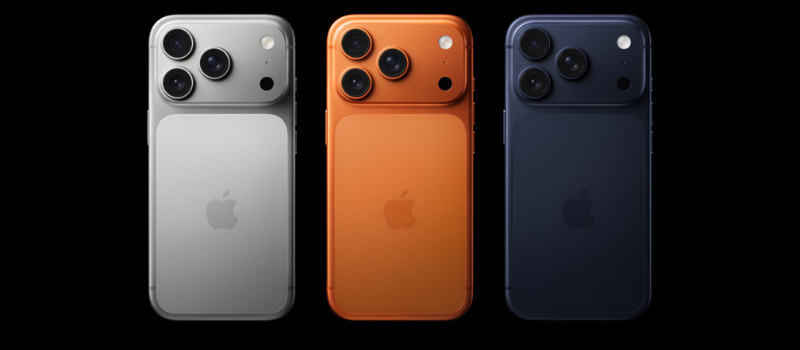
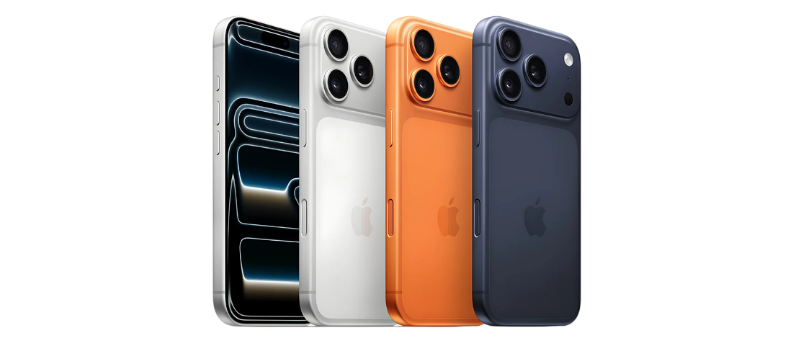
The first thing that jumps out is the new cosmic orange color. Yes, orange. And against all odds, not only does it work, it looks spectacular. Apple has opted for a bolder aesthetic without losing elegance, and it has pulled it off. Compared to more sober tones like deep blue or the traditional silver, this version stands out with its own personality. Those who want something stricter may still dream of matte black, but you can’t deny that this proposal gives the Pro lineup a fresh air.
Another striking change is the camera module, which is now larger and quite reminiscent of what we see on high-end Android phones. It’s not a subtle evolution: it draws attention from every angle. Additionally, the back features two types of finish that create an interesting visual and tactile contrast.
Regarding materials, Apple has taken an unexpected turn: it returns to aluminum for the chassis, leaving behind the titanium of the previous model. The official reason is the improvement in thermal dissipation. However, the back still relies on Ceramic Shield, that ultra-tough glass also found on other Apple products. The feel is smooth, very comfortable —similar to the iPhone Air— and, in theory, more resistant to scratches. Of course, all this may be secondary if you’re the type who always uses a case.
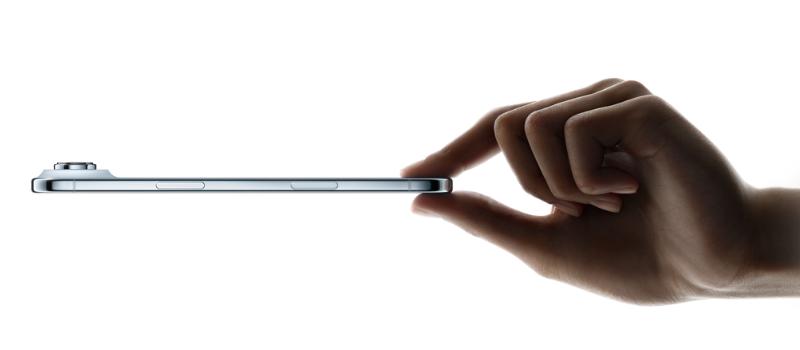
And how does it feel to hold it? Quite familiar if you’re coming from the iPhone 16 Pro, though with a few differences. It’s slightly larger and heavier: about 0.4 mm more in height and width, 5 grams more on the scale, and a half-millimeter increase in thickness. It may seem insignificant, but that small difference is noticeable when gripping it. The shift from titanium to aluminum also slightly changes the texture, though it still conveys a premium feel.
Apple knows how to take care of the details. And this iPhone 17 Pro, though outwardly similar, makes it clear that it isn’t “just another one” in the family.
Vapor chamber: the iPhone 17 Pro's new weapon against heat
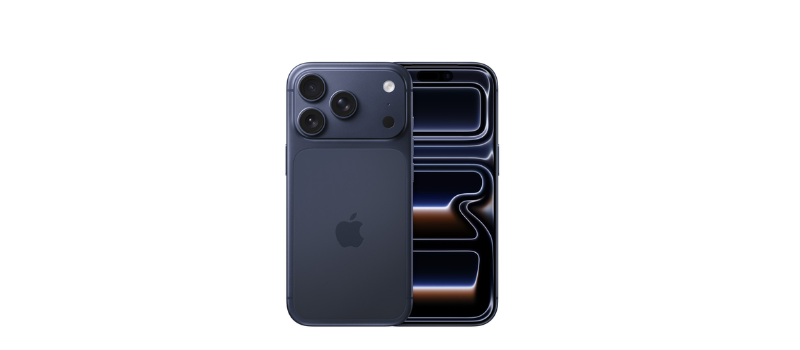
One of the most interesting —and less visible— innovations of the iPhone 17 Pro is inside: the incorporation of a vapor chamber for cooling. Although this technology is not new in the mobile world, it is new within the Apple ecosystem, and its arrival marks an important step in the evolution of the brand’s most demanding models.
But what exactly is a vapor chamber and why does it matter? In short, it is an advanced cooling system that dissipates heat more efficiently than traditional methods. We've already seen it on some high-end Android smartphones, especially those oriented toward gaming, and now Apple has decided to adopt it to guarantee more stable and sustained performance.
This is especially relevant in two key scenarios: summer and cases. Because yes, it’s not enough for the system to work in ideal conditions; it has to perform just as well under the scorching August sun or when the phone is protected by a silicone case that blocks natural ventilation.
Additionally, this improvement will not only benefit those who game for hours or edit heavy videos. It will also come into play when you push the camera to its maximum capability, especially if you record in 4K or use advanced features like Cinematic Mode or ProRes. As many users already know, these processes can make the phone heat up quickly, and that’s where the vapor chamber comes in to make a difference.
iPhone 17 Pro camera: smarter, more versatile... though not the most ambitious
The iPhone 17 Pro camera promises a lot. Although we haven’t yet been able to do an in-depth test as in a full review, we have had the opportunity to explore its potential in different lighting and usage situations. And the truth is that Apple has taken interesting steps, both in hardware and in how it processes images.
One of the most striking points is the adoption of 48-megapixel sensors under all lenses, including the telephoto. This improvement is especially noticeable when we use the zoom: it’s now possible to reach an optical zoom of up to 4x and a hybrid zoom —which Apple calls “optical quality”— up to 8x. This adds a digital zoom of up to 40x in photo mode, or 25x if we are recording video.
Now, here’s where things get interesting. Although the system responds well in normal conditions, when you push the zoom to its maximum level it’s evident that some sharpness is lost. It’s not dramatic, but the limits are there. Apple has opted for a conservative strategy in this area, avoiding the extremes we already see in other brands like Samsung, Xiaomi, or Vivo, where figures approaching 100x or even 200x are reached.
The difference is not only in the optics, but also in how each manufacturer processes the image. Apple prioritizes fidelity and naturalness, while other brands rely heavily on artificial intelligence to “reconstruct” details that, in reality, weren’t there. This choice reduces digital artifacts, though it also limits the total reach. In practice, that means you’ll get more consistent results, though perhaps not as spectacular in terms of zoom as on other devices.
A detail that does make a difference —and that could go unnoticed— is the new square sensor for the front camera. It may seem like a minor curiosity, but it’s actually a brilliant solution. Traditionally, camera sensors have a 4:3 aspect ratio, which forces you to rotate the phone to better use the frame when shooting horizontally. Now, with this square sensor, it’s possible to take photos or shoot horizontal video without changing the phone’s orientation.
This not only improves comfort when taking selfies or recording content for social networks, but also has the potential to change how we use the camera in daily life. The result is natural, well-framed, and also avoids unnecessary cropping of the image. Seeing it available across the entire iPhone 17 series —not just the Pro model— is a smart move that other brands are sure to imitate soon.
Conclusion: an iPhone that evolves intelligently
The iPhone 17 Pro doesn’t aim to break everything at once, but it does improve right where it matters. Apple has bet on a conscious evolution, centered on refining the user experience rather than inflating specifications. And the result is noticeable.
The new design, bolder and more functional, marks a real aesthetic difference. The vapor chamber cooling system provides stability in demanding tasks, something many will appreciate when recording or playing. And the camera, without being the most aggressive in numbers, offers consistent, natural, and smarter results, with a square front sensor that could set a new standard in the industry.
It isn’t a perfect phone, nor does it pretend to be. But it is the most complete iPhone yet, designed for those who seek performance, quality, and balance in a single device. If you’re coming from earlier models and waiting for a meaningful leap, the iPhone 17 Pro has solid arguments to convince you.
And the best part: this is only the beginning. With future updates and an ever more refined ecosystem, this model has everything it needs to keep shining for years.



.png)