The arrival of a baby transforms every detail of daily life. Silence is no longer merely an absence of noise, but a signal that is heard with the heart on alert. Sleep becomes an act divided between rest and the constant need to watch. It’s not about fear, but that deep instinct that pushes you to protect, even when your eyes close.
In this scenario, technology stops being a luxury and becomes a silent ally. Baby monitors are not just modern devices: they are an extension of that look that doesn’t want to miss anything, not even the smallest sighs. But choosing one can be overwhelming. Among resolutions, WiFi connections, sensors, and remote features, it’s easy to get caught up in the technical and forget the essential: which of all these options really fits your way of caregiving?
This article doesn’t aim to fill you with commercial promises. Here you will find a clear guide, based on what really matters: peace of mind, reliability, and common sense. Because before buying, you must understand. And if you’re here, you’ve probably already taken the most important step: choosing to be present, even when you can’t be in the room.
Why Is It Important to Choose a Baby Monitor Well?
Having the best baby monitor isn’t just a technical issue; it’s an emotional investment. It’s not only about buying a device with a good price–quality ratio, but about trusting that that small device will be your eyes and ears when you’re not in the room. From image quality to features like zoom, two-way communication, or the temperature sensor, the choice cannot be taken lightly. Here we explain why it’s so important to get it right from the start.
Safety and peace of mind for you and your baby
A camera with night vision via infrared and night light not only allows you to watch your baby while they sleep, it also gives you the possibility to act quickly if something goes wrong. Hearing a cry, seeing a strange movement, or simply confirming that your baby sleeps peacefully can make the difference between intervening in time or arriving late.
Additionally, a baby monitor with two-way communication, which allows you to talk to your baby remotely or even play lullabies, provides an extra dose of tranquility. Knowing you can soothe them without entering the room reduces family stress, improves rest, and gives you back space for self-care.
Avoid common mistakes when buying a baby monitor
Many first-time parents make the mistake of focusing only on price or on a large screen in inches without evaluating other vital functions. Does it have an LCD screen? Does it include a temperature sensor? What is its real range? A good camera should offer at least 300 meters of range, clear night vision, and options like digital zoom or remote pan.
Buying without considering the home environment—such as WiFi interference or thick walls—can create signal problems and constant frustrations. The same goes for models that don’t offer good battery life or that require being plugged in all the time.
Avoiding these mistakes means saving money, time, and worry.
Differences between modern and old models
Baby monitors have evolved a lot. The latest models offer high definition, color LCD screens, mobile app connectivity, sound or motion activation, and advanced features like lullaby playback or temperature alerts. Some even allow splitting the screen to monitor more than one room.
In contrast, older devices tend to have poorer image quality, lack efficient night vision or two-way audio, and rarely allow adjusting features like zoom or microphone sensitivity. They also usually don’t cover large distances, making them less effective if you need a range of 300 meters or more.
Opting for a modern model isn’t a whim: it’s ensuring a more complete, safe, and durable experience. If you’re looking for value for money, make sure the features align with what you and your baby really need.
Key Factors to Consider Before Buying
Choosing a baby monitor may seem straightforward at first glance, but behind each model there are differences that can directly affect the user experience. It’s not just about looking at prices or choosing the most well-known brand. Before buying, it’s essential to understand which aspects really influence the device’s functionality and, above all, the peace of mind it can offer you.
Here we present the key factors you should always keep in mind when making a decision.
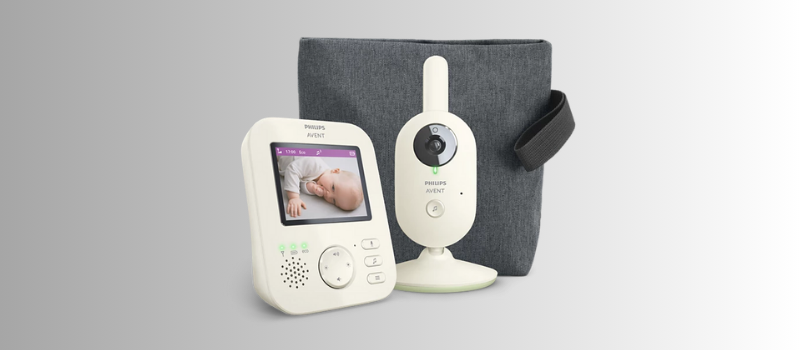
Image quality (resolution, night vision)
The sharpness of the image is much more important than it seems. It’s not enough to see “something” on the screen. You need to clearly tell if your baby has turned over, if they are breathing calmly, if there’s any object in the crib that shouldn’t be there. Therefore, a camera with good resolution —at least HD— makes a real difference.
Moreover, night vision is a crucial component. Babies spend most of their time sleeping in low light or in total darkness, so make sure the camera has quality infrared to show you details even in complete darkness.
Connectivity: WiFi yes or no?
This is where many parents hesitate. Cameras with WiFi let you view the baby from anywhere in the world via an app, which is ideal if you work outside or leave the child with a caregiver. They also tend to have more advanced features, such as real-time alerts or cloud recording.
However, they require a stable and secure network. If your connection is weak or you have concerns about digital privacy, you might prefer a WiFi-free camera, that works with a direct signal between camera and monitor. They are more limited, but also simpler and less vulnerable to hacks.
Two-way audio and sensors
Being able to hear your baby is essential, but so is that they can hear you. Two-way audio allows soothing them with your voice without entering the room, something that in many cases prevents them from waking up completely.
Added to this are sensors such as temperature, humidity, or even movement. They’re not just tech extras: they give you a more complete read of your baby’s environment and can alert you if there are changes that require immediate attention.
Range and battery autonomy
A camera with limited range can become a problem in large or multi-story houses. Make sure the signal covers the entire area you’ll move around in while your baby sleeps.
On the other hand, if the monitor runs on a rechargeable battery, check how many hours it lasts in continuous use. Some models barely reach 4 hours, while others exceed 8 or even offer fast charging. If you don’t want to depend constantly on a plug, this detail matters more than it seems.
Compatibility with mobile app or built-in screen
Some models offer a dedicated screen, others only work through a mobile app. Both systems have advantages.
Built-in screens allow keeping the baby monitor on continuously without occupying your phone. They’re practical and easy to use, especially for older people or occasional caregivers.
Conversely, models that rely on apps tend to be more versatile and portable. You can watch the baby from work, receive personalized notifications, and access more advanced features. That said, they also drain the phone’s battery and require a more careful initial setup.
Top Baby Monitor Cameras Recommended [2025]
In 2025, the baby monitor market continues to grow with options for all kinds of families. From ultra-technological models with sleep analysis to basic options designed for tight budgets, the variety is wide. To simplify your search, we have selected five standout models considering three key pillars: image quality, real parental opinions, and the price–functionality relationship.
Not all cameras are the same, and not all needs are the same. This selection covers different user profiles to help you find the model that best fits your routine and expectations.
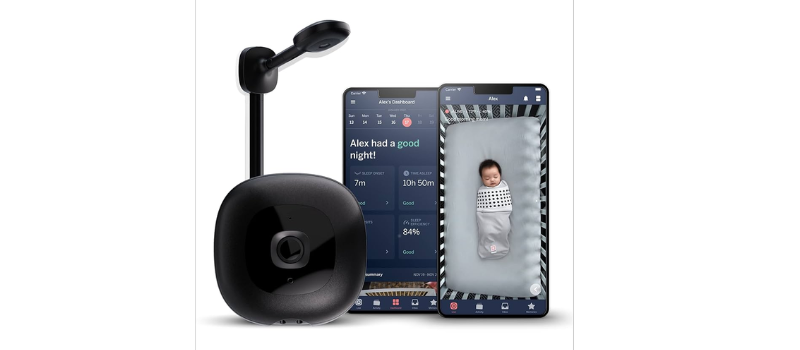
1. Nanit Pro Smart Baby Monitor – Best in image quality
This model stands out for its excellent Full HD resolution and for integrating advanced features such as motion alerts, sleep tracking, and analysis of the baby’s environment. The camera can be paired with a special stand and offers precise details even in low light.
- Pros: Extremely high image quality, smart analytics options, ideal for those seeking cutting-edge technology.
- Cons: High price and some features require an additional subscription.
- Estimated price: From €330, depending on included accessories.
2. Philips Avent Video Baby Monitor SCD882/26 Advanced – Best value for money
A balanced model, with built-in screen, steady video, and clear audio. It isn’t the most advanced in terms of smart technology, but it offers a reliable and easy-to-use experience. An excellent option for those who want good quality without going to the extreme on price.
- Pros: Trusted brand, good battery life, solid features for the price.
- Cons: No WiFi connectivity or advanced extra features.
- Estimated price: Between €130 and €150.
3. Motorola Baby Monitor VM482Anxl – Ideal for first-time parents
Designed with simplicity in mind, this model is ideal for those starting in the baby-care journey and want something straightforward, without technical complications. It comes with a screen, good coverage, and intuitive controls.
- Pros: Very easy to use, backed by a well-known brand, affordable.
- Cons: Basic features, without advanced options like environmental sensors or remote connectivity.
- Estimated price: Around €110.
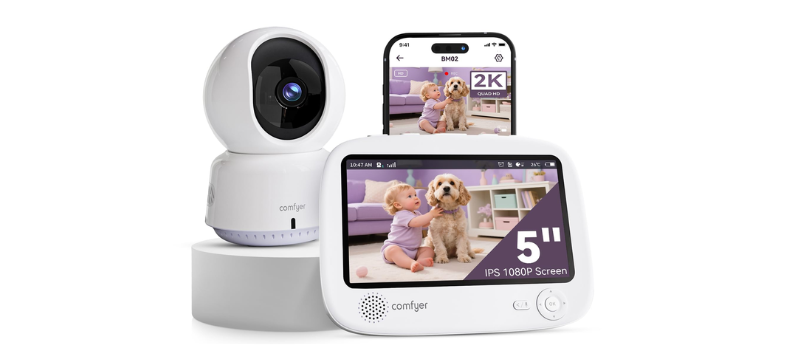
4. Comfyer Baby Monitor with Two Cameras and Split Screen – Best with dual camera or advanced features
Designed for homes with more than one child or larger spaces, this model offers two cameras and a screen that allows split-view. It’s ideal if you need to monitor several areas at once. The features are practical and cover the essentials efficiently.
- Pros: Includes two cameras, good visual coverage, excellent value for feature-to-cost ratio.
- Cons: More extensive installation, image quality mid-range compared to premium models.
- Estimated price: Approximately €100, depending on the seller.
5. Babystar Babyphone Video Monitor 3.2″ – Best budget option
If you’re looking for something functional, affordable, and straightforward, this model meets the basics: a compact screen, acceptable viewing, and simple connection. Although it doesn’t offer advanced features, it’s more than enough for those who only need to monitor while the baby sleeps.
- Pros: Very affordable, perfect as a second monitor or for occasional use.
- Cons: Basic image, no remote connection or smart sensors.
- Estimated price: Between €40 and €45.
Final Tips for Choosing the Right Camera
A baby monitor isn’t just a technical decision: it’s also a personal decision. After comparing models, features, and prices, it’s worth taking a moment to reflect from everyday life. Because beyond the specifications, what matters is that the device fits your life, not the other way around. Here are three key tips before making a final decision.
Assess your space and lifestyle
Every home is different. What works in a small apartment may not necessarily be useful in a two-story house. So, the first step is to observe your surroundings: how many rooms do you want to cover? Where will the baby sleep? Will you have to move around the home frequently while they sleep?
Your lifestyle also matters. If you spend many hours away from home, a WiFi-connected model may be more useful. If you prefer something without technological complications, a camera with an integrated screen and no internet can give you peace of mind without apps or complicated adjustments.
Consider long-term use
The baby will grow quickly, but that doesn’t mean the camera will stop being useful. Many parents continue using it during the early years to monitor whether the child sleeps well, whether they get out of bed, or even when they’re sick.
Some cameras can also be used in other spaces, like the playroom or later as a security monitor. Therefore, investing in a durable, flexible model with features that won’t become obsolete in a few months can be a more cost-effective decision in the medium term.
Read real opinions from other parents
Beyond what the manufacturer says, other parents’ experiences are pure gold. Authentic reviews reveal problems that don’t appear in the technical specifications: if the app crashes, if the battery lasts less than promised, if night vision really works.
Take a moment to read detailed reviews, not just ratings. Often you’ll find answers to questions you didn’t even know you had.
Conclusion
Buying a baby monitor with the right camera isn’t just about technology; it’s about trust, peace of mind, and connection with your baby at every stage. Today, there are options for every type of family, every budget, and every need, from advanced models with smart features to simple but effective alternatives.
The most important thing is that the camera fits you: at your pace, in your home, and in the way you choose to care. There isn’t a perfect model for everyone, but there is one that fits you.
Throughout this guide, you were given a clear, practical, and honest view to help you make an informed decision. Now you are much closer to finding that silent ally that, without making a sound, will let you rest more calmly and look at your baby with the certainty that everything is all right.
If this guide was useful to you, share it with other parents or leave us your opinion. And if you’ve already chosen your ideal camera, congratulations! You’ve taken another step toward safer, connected, and serene motherhood or fatherhood.

.png)