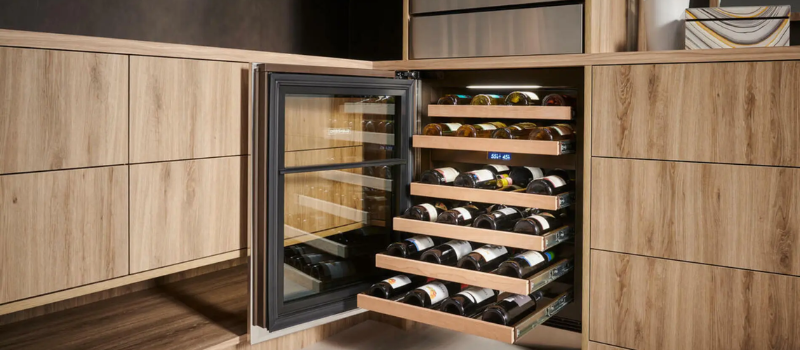
Choosing a wine cabinet is not simply purchasing an appliance. It is a decision that directly influences how wine is stored, enjoyed and valued. Whether you are just starting out in the wine world or you have been part of it for some time, having a wine cabinet at home represents a step toward the culture of care and respect for every bottle.
Often, when looking for information about wine cabinets, one encounters technical descriptions, confusing comparisons, or endless lists of models. But what really matters—and what is little talked about—is how to tailor that choice to your lifestyle, your habits and the space you have available. Because it’s not just about how many bottles fit, but what type of wines you drink, how often, the climate you live in, and even how important design is in your home.
In this practical and comprehensive guide, you’ll discover the essentials to make an informed decision, without detours or unnecessary technobabble. From the different types of wine cabinets to the key aspects you should consider before buying, including useful tips according to each user profile.
The goal is clear: to help you find the ideal wine cabinet for you.
What is a wine cabinet and why should you have one at home?
Having a wine cabinet at home is much more than an aesthetic or luxury issue. It is an essential tool for those who want to preserve their wines under proper conditions, respecting their properties and enhancing their natural evolution over time. But what exactly is a wine cabinet and what makes it so different from other storage spaces?
What is a wine cabinet for?
A wine cabinet is an appliance designed specifically to store wine under optimal conditions of temperature, humidity and ventilation. Unlike a conventional refrigerator, which is designed to preserve foods and beverages at lower temperatures, the wine cabinet keeps wine in an ideal range that typically oscillates between 10 °C and 18 °C, depending on the type of wine.
Its main function is to preserve the integrity of the wine, prevent abrupt temperature changes and protect it from factors that could alter its flavor, aroma or texture.
Differences between a wine cabinet, a wine cellar and a regular refrigerator
Although sometimes used as synonyms, wine cabinet, wine cellar and refrigerator have very different functions. A cellar, in the traditional sense, is an underground or climate-controlled space, designed to store large quantities of wine for long periods. It is usually present in rural houses or properties with enough space.
The regular refrigerator, on the other hand, is not designed to preserve wine. Its temperatures are too low, its humidity is inadequate, and the constant vibrations can harm the development of the wine inside the bottle.
The wine cabinet occupies an intermediate place: it is practical, takes up little space and is designed exclusively to care for wine in domestic settings.
Benefits of storing wine at a controlled temperature
Keeping wine at a constant temperature not only extends its shelf life but also allows it to age properly. Excess heat or extreme cold can alter the wine’s chemical structure, causing losses of aroma, flavor or even color.
With a wine cabinet, you achieve stability, the cork is protected from dehydration and premature oxidation is avoided. In addition, having the wine at the ideal temperature allows you to enjoy it at its peak, without improvisations or waiting.
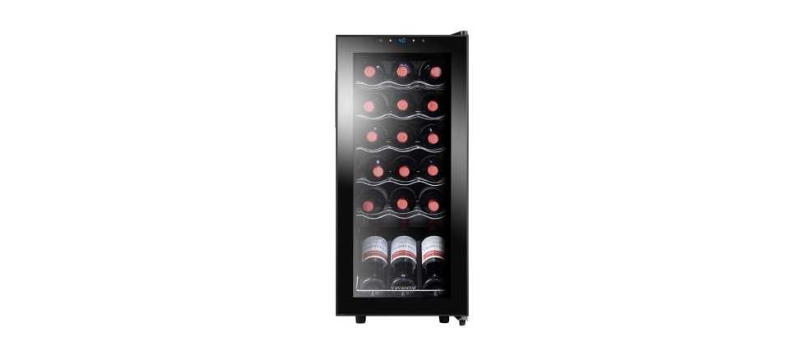
Types of wine cabinets: Which one best fits your needs?
Before buying a wine cabinet, it’s essential to know the different types that exist on the market. Not all wine cabinets work the same or are designed for the same user profile. Some are designed for those with limited space, while others respond to more demanding needs, such as preserving different types of wine at once or storing a growing collection. Choosing the right type will allow you to care for your wines effectively and enjoy a much more satisfying experience.
Thermoelectric wine cabinets vs compressor wine cabinets
Thermoelectric wine cabinets for wine lovers use a cooling system without moving parts, based on the Peltier effect. They are quiet, consume less energy and tend to be more affordable. However, they have limitations: they are not as efficient in warm climates and their cooling capacity is more limited, so they are usually recommended for cooler places or for those who store few bottles.
In contrast, cabinet-style compressor wine cabinets work similarly to conventional refrigerators. They are more powerful, can cool more quickly and maintain stable temperatures even in hot environments. They are ideal for those living in areas with intense summers or who want to preserve a larger collection. Their main drawback is that they generate a bit more noise and vibration, although modern models have improved a lot in that regard.
One-zone or two-zone wine cabinets
Another key aspect for models in the best conditions is the number of temperature zones. One-zone wine cabinets maintain a uniform temperature throughout the interior, which is perfect if you only store wines of the same type, such as reds or whites.
Two-zone wine cabinets, for their part, allow you to preserve different types of wine at the same time, each at its ideal temperature. For example, you can have red wine at 16 °C and white wine at 8 °C, without the need for two separate appliances. This option is especially advisable if you enjoy different styles of wine or if you tend to host guests with varied tastes.
Built-in, countertop or freestanding wine cabinets
In terms of design and installation, wine cabinets are divided into three broad groups. Built-in wine cabinets are designed to integrate into kitchen furniture or spaces designed to measure. They usually have front ventilation and an aesthetic finish that harmonizes with the surroundings. They are ideal for modern kitchen projects or elegant spaces.
Countertop wine cabinets are compact, lightweight and perfect for small spaces. They can be placed on a countertop or furniture and are widely used by those who have few bottles and little space.
Finally, freestanding or standalone wine cabinets offer greater flexibility. They can be placed in any corner of the house, as long as ventilation is respected. They come in multiple sizes and capacities, and are an excellent option for those who prioritize functionality without compromising design.
Key factors to consider before buying a wine cabinet
Buying a wine cabinet should not be an impulsive decision. While the design may be attractive and the features promising, the essential thing is to evaluate a series of practical factors that will directly influence the preservation of your wine and the long-term ease of use. Below, we explain the most important aspects to consider before making a purchase decision.
Capacity and number of bottles
One of the first points to consider is how many bottles you want to store. Wine cabinets come in a wide range of capacities, from small models for 6 or 8 bottles, to professional options with space for more than 150.
It is advisable to think not only about the present but also about your future habits: Will you expand your collection over time? Do you drink wine frequently or only on special occasions? A wine cabinet with limited capacity can become obsolete quickly, while one that is too large may mean unnecessary expense and take up valuable space.
Temperature and humidity control
Thermal stability is one of the most important elements for preserving wine. Most wine cabinets allow you to regulate the temperature between 5°C and 20°C, although the ideal is to keep the wine between 12°C and 16°C, depending on the type.
Additionally, it is essential that the unit maintains a stable humidity level, between 60% and 75%. A environment that is too dry can dry out the corks and allow oxygen to enter, ruining the contents of the bottle. Some wine cabinets have specific systems to regulate this factor; if not, it is advisable to check whether external solutions can be added to maintain humidity.
Noise, energy consumption and efficiency
The noise level is another factor that is often overlooked until the wine cabinet is installed. Thermoelectric models tend to be quieter, while compressor units can generate vibrations and perceptible sounds, especially in small spaces.
Regarding energy consumption, an efficient wine cabinet not only represents savings but also helps protect the environment. Look for models with energy efficiency labels (A, A+, etc.) and low-energy features, especially if you plan to keep it on year-round.
Design, materials and available space
Finally, the exterior appearance also carries weight. There are wine cabinets in modern style, rustic, minimalist or industrial. Choose one that integrates well with your surroundings, but without neglecting the quality of materials: glass doors with UV protection, wood or metal shelves, interior LED lighting, among other details.
Also make sure the model’s dimensions fit the place where you plan to install it. Leaving space for ventilation is key, especially for freestanding models.
How much does a wine cabinet cost? Price ranges and recommendations
The price of a wine cabinet can vary considerably depending on its capacity, technology, materials and design. Therefore, before making a purchase, it’s important to know the different price ranges and understand what you can expect from each. From compact and affordable models to high-end options with advanced features, the market offers solutions for all kinds of needs and budgets.
Budget wine cabinets: Are they worth it?
The most affordable wine cabinets typically cost between €100 and €250. They are ideal for those starting in the world of wine or needing to store a few bottles at home. In general, they have limited capacity (between 6 and 12 bottles) and operate with thermoelectric technology, which implies lower energy consumption and quiet operation.
Although they can be very practical, these wine cabinets have some limitations. Their performance can be affected by high ambient temperatures, they do not always offer precise humidity control and their lifespan may be shorter if used frequently or in demanding conditions. Still, for occasional or basic home use, they can be a good option if you choose a model from a recognized brand with good ratings.
Mid-range vs high-end: pros and cons
In the mid-range (between €300 and €700), wine cabinets offer a better balance between features and price. They usually have greater capacity (from 18 to 40 bottles), compressor technology, better temperature control and more robust finishes. Some include double temperature zones, UV protection on the glass, removable shelves and anti-vibration systems. They are suitable for demanding users who value both functionality and durability.
Above €800 you’ll find high-end wine cabinets. These are designed for collectors, advanced enthusiasts or professional use. They integrate more sophisticated preservation technologies, precise digital control, internal climate control systems, activated carbon filters and reinforced structures. They also stand out for their elegant design and premium materials. The higher cost is justified if you’re looking for a long-term, high-performance solution.
Conclusion: Choosing the right wine cabinet enhances your wine experience
Investing in a wine cabinet is not just about preserving bottles: it’s a way to care for the flavor, aroma and quality of every wine you choose to enjoy. Whether you have a few special labels or a larger collection, having a space dedicated exclusively to its preservation makes a difference.
As you have seen throughout this guide, there are different types of wine cabinets, each with features tailored to different needs, budgets and lifestyles. Evaluating aspects such as capacity, the type of refrigeration, temperature control, and energy efficiency will allow you to make an informed decision aligned with your habits and expectations. Additionally, design and functionality also matter. A well-chosen wine cabinet not only protects your wine but also integrates harmoniously into your home, adding aesthetic value and comfort.


.png)